
Retiring in Redding, CA: Why Northern California Appeals to Retirees
Most people assume retiring in California means choosing between an ocean view and a comfortable budget. Redding quietly proves otherwise.
Sitting at the northern end of the Sacramento Valley, this city of roughly 93,000 pairs the outdoor beauty and mild winters that draw people to California with home prices and living costs that stay within reach of a fixed income.
It also happens to have one of the most established retiree populations in the region, along with the medical infrastructure to support it.
Here is a closer look at why Northern California keeps landing on retirement shortlists, and what to weigh before making the move.
Why Retirees Are Looking North
Redding has built a reputation as a place where retirement savings stretch further without sacrificing quality of life. The combination of affordability, established senior services, and year-round outdoor access explains much of the appeal.
A Snapshot for Retirees
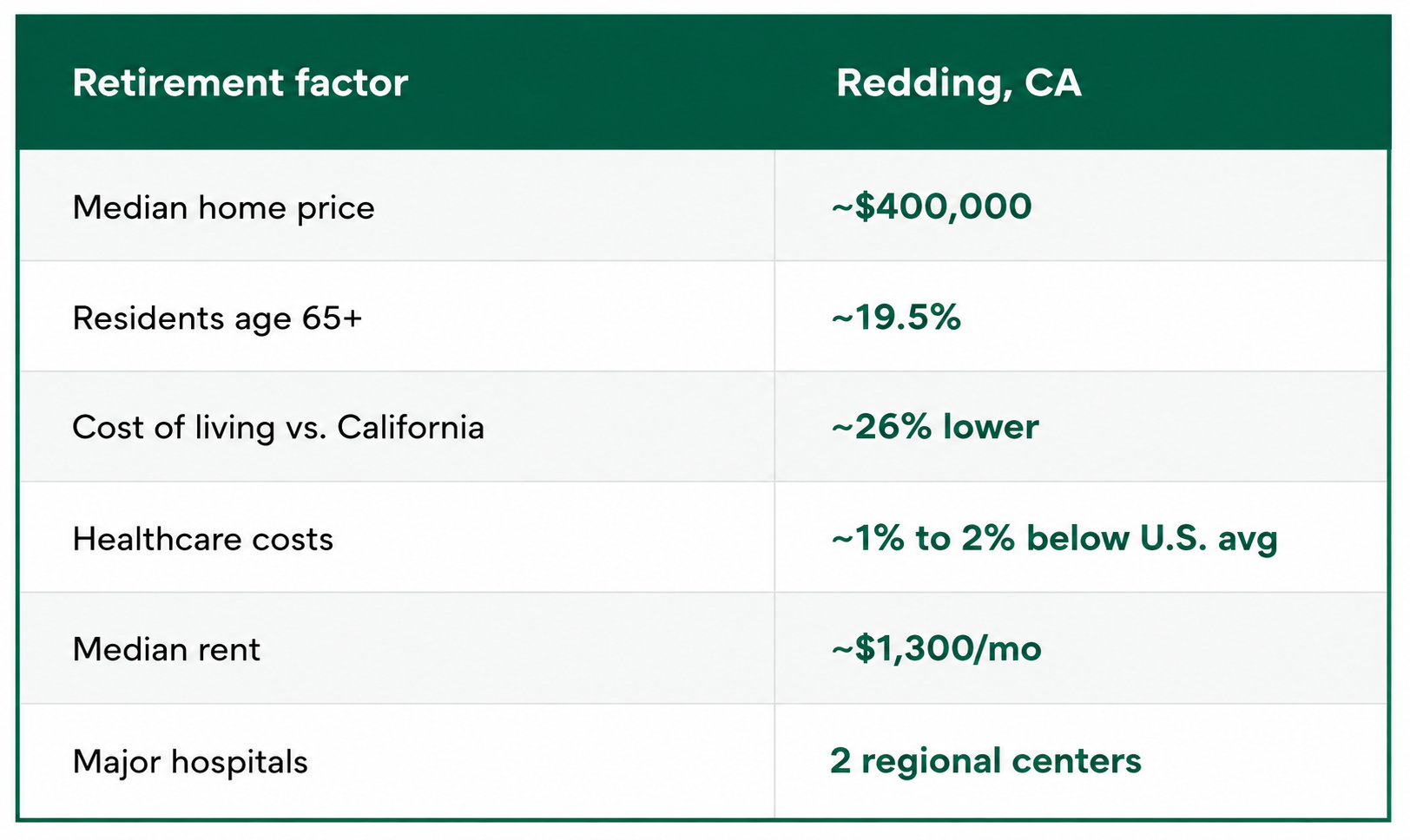
These numbers tell a consistent story. Redding costs meaningfully less than the California average while offering the services retirees actually need.
An Established Senior Community
Roughly one in five Redding residents is 65 or older, which matters more than it might seem. A large retiree population means the city has already built the infrastructure around it: senior programs, social clubs, medical specialists, and volunteer organizations.
Newcomers are not pioneering anything here. Finding a community, a walking group, or a book club tends to be straightforward, and that ease of connection is one of the quieter advantages of retiring in a place where your peers are already well represented.
The Financial Case for Retiring in Redding
For most retirees, the decision comes down to whether the numbers work over a twenty or thirty year horizon. Redding performs well on that test, particularly for anyone selling a home in a costlier part of the state.
Home Prices and What Your Equity Buys
Redding's median home price sits around $400,000 in 2026, a fraction of what comparable California markets command. The chart below shows the gap.
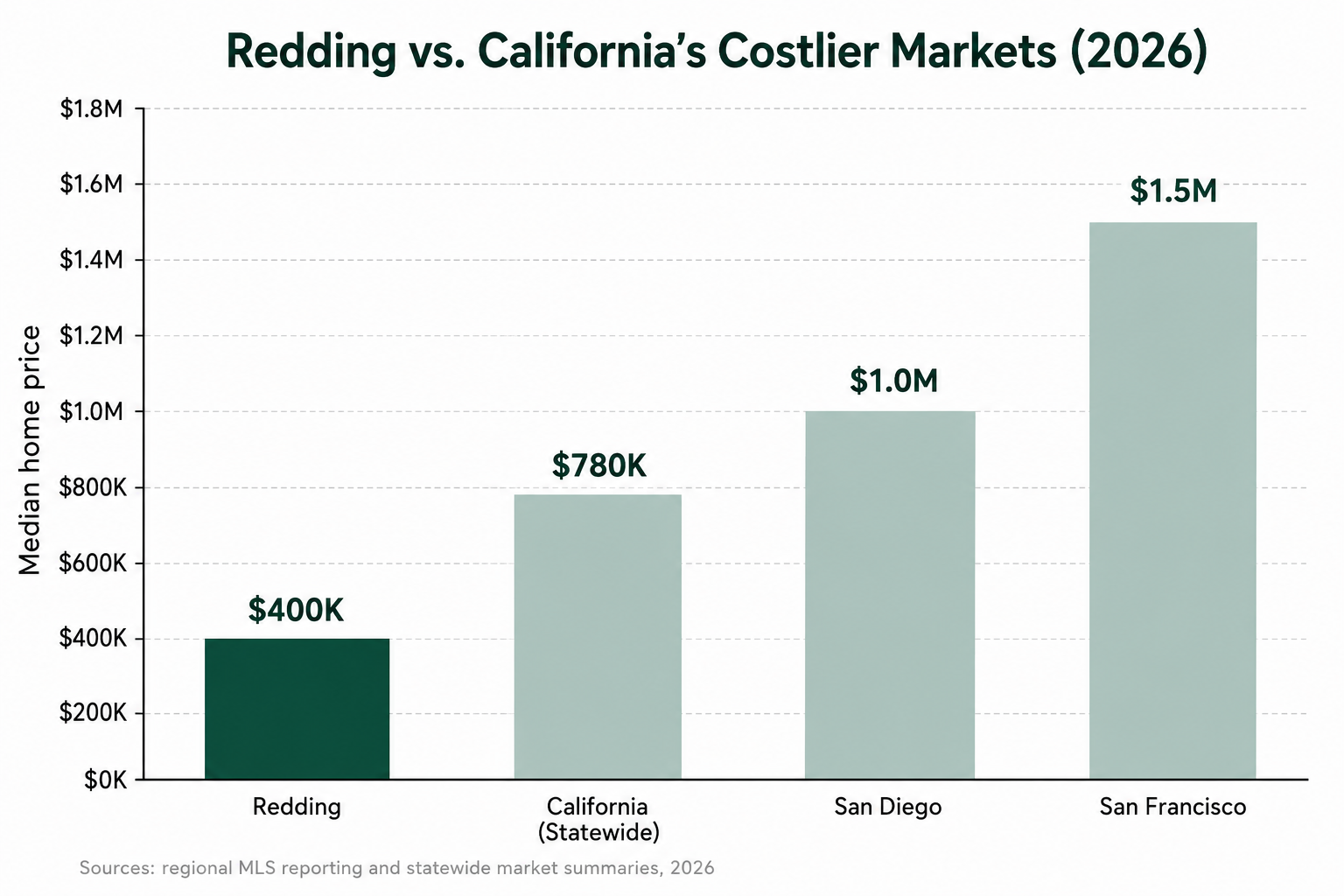
For a retiree selling a long-held home in the Bay Area or Southern California, that difference can free up several hundred thousand dollars in equity.
Redirected into retirement accounts, travel, healthcare reserves, or simply a smaller monthly draw, that capital changes what the next chapter looks like. Estimates suggest a couple in Redding might spend $25,000 to $30,000 annually on housing, compared with substantially more in coastal markets.
The Proposition 19 Advantage
This is the piece many retirees overlook. Under Proposition 19, California homeowners who are 55 or older can transfer the assessed property tax value from their current primary residence to a replacement home anywhere in the state, and they can use that benefit up to three times.
In practice, a retiree who has owned a home for decades and carries a low assessed value may be able to bring much of that tax basis to a Redding home rather than restarting at current market value.
The rules carry real conditions. The replacement home generally must be purchased within two years of selling the original, and if the new home costs more than the one sold, the difference is added to the transferred value.
Because the calculation depends on your specific situation, this is worth reviewing with a tax professional or the county assessor before you list. The potential savings, though, can be significant enough to shape the timing of a move.
Everyday Costs in Retirement
Beyond housing, Redding's overall cost of living runs roughly 26 percent below the California average. Healthcare, a category that carries real weight in retirement, tracks about one to two percent below the national average.
Not everything is cheaper: transportation costs run above the national average, gas prices reflect California rates, and summer cooling drives utility bills up from June through September. On balance, though, the math favors retirees who are trading a high-cost market for this one.
Healthcare and Senior Services
Access to quality medical care often decides where retirees settle, and it is an area where Redding outperforms cities of similar size because it serves as the regional hub for far Northern California.
Regional Medical Care
Redding anchors healthcare for a multi-county area. Mercy Medical Center Redding operates with more than 250 medical staff and 266 beds, and serves as a regional referral center with cancer care, cardiac care, and one of the few Level II trauma centers north of Sacramento.
Shasta Regional Medical Center adds a second full-service hospital with dedicated senior wellness programming, including regular health classes and screenings.
The concentration of specialists, outpatient clinics, and diagnostic facilities means most care happens locally rather than requiring a drive to Sacramento.
Senior Living and Support Options
Redding supports a full continuum of care, from independent and 55-plus communities through assisted living, memory care, and skilled nursing. That range matters for long-term planning, since needs often change over time and staying within the same community is easier than relocating again later.
Local support services round things out, including senior nutrition programs, transportation assistance, and reduced-fare public transit through the Redding Area Bus Authority.
Lifestyle and Recreation
Affordability and healthcare make a place workable. Lifestyle is what makes it enjoyable, and this is where Redding earns much of its loyalty among retirees who relocate here.
Outdoor Living Year-Round
The Sacramento River runs through the city, and the 17-mile Sacramento River Trail offers accessible walking and cycling right in town. The Sundial Bridge has become the city's landmark, and Whiskeytown Lake, Lassen Volcanic National Park, and views toward Mount Shasta are all close at hand.
Mild winters mean outdoor activity continues through most of the year, which suits retirees who want to stay active without fighting snow.
Arts, Culture, and Community
Redding supports theaters, museums, and galleries alongside a steady calendar of community events. Clubs and interest groups span gardening, hiking, travel, and books, giving newcomers natural entry points. For a city its size, the cultural offering is broader than most people expect before visiting.
Getting Around
Traffic is light and the average commute runs about 25 minutes, which makes daily errands genuinely low-stress. Public transit offers senior fares, and many senior communities provide scheduled transportation to appointments and shopping, which becomes valuable for anyone who eventually stops driving.
What to Consider Before You Move
An honest look at any retirement destination includes the tradeoffs. Redding has a few worth understanding upfront so there are no surprises after closing.
Summer Heat and Wildfire Season
Summers here are hot and dry, often running three to four months with significant air conditioning use. Wildfire season can also bring smoke that affects air quality, which is a genuine consideration for anyone with respiratory conditions.
Many residents adapt by adjusting their schedules seasonally, and homes with efficient cooling systems are worth prioritizing during your search.
Insurance and Long-Term Planning
California's homeowners insurance market has tightened in recent years in response to wildfire risk, so request quotes early and verify a property's hazard designation before committing.
It is also worth thinking a decade or two ahead about proximity to medical care and the availability of higher levels of senior care, both areas where Redding's regional hub status works in your favor.
Ready to Start Your Next Chapter?
Retiring in Redding appeals to people who want their money to go further without giving up the things that made California appealing in the first place.
Between home prices well below the state median, potential property tax savings under Proposition 19, strong regional healthcare, and outdoor access in nearly every direction, it offers a rare balance for retirees planning a long and comfortable next chapter.
Finding the right home matters even more in retirement, when single-level layouts, manageable yards, and proximity to medical care all factor into the decision.
Our team at Greater Life Realty knows the Redding market and works regularly with retirees relocating from across California.
Reach out today to talk through neighborhoods, tour current listings, and find the home that fits the life you are planning.
