
Buying a Home in Red Bluff vs Redding: Which Is Right for You?
Two cities, about 30 minutes apart on Interstate 5, and two very different buying experiences.
Red Bluff sits in Tehama County with lower prices and a slower, more rural pace. Redding anchors Shasta County as the region's economic hub, with more jobs, more services, and prices to match.
Both give you Northern California living well below what the coast demands, but the right choice depends on your budget, your commute, and what you want your daily life to look like.
Here is an honest side-by-side look at what buying in each city actually involves, so you can decide which one fits.
How Red Bluff and Redding Compare
Before getting into the details, it helps to see the two markets next to each other. The differences in price, size, and cost of living shape almost every other decision you will make as a buyer.
The Numbers Side by Side
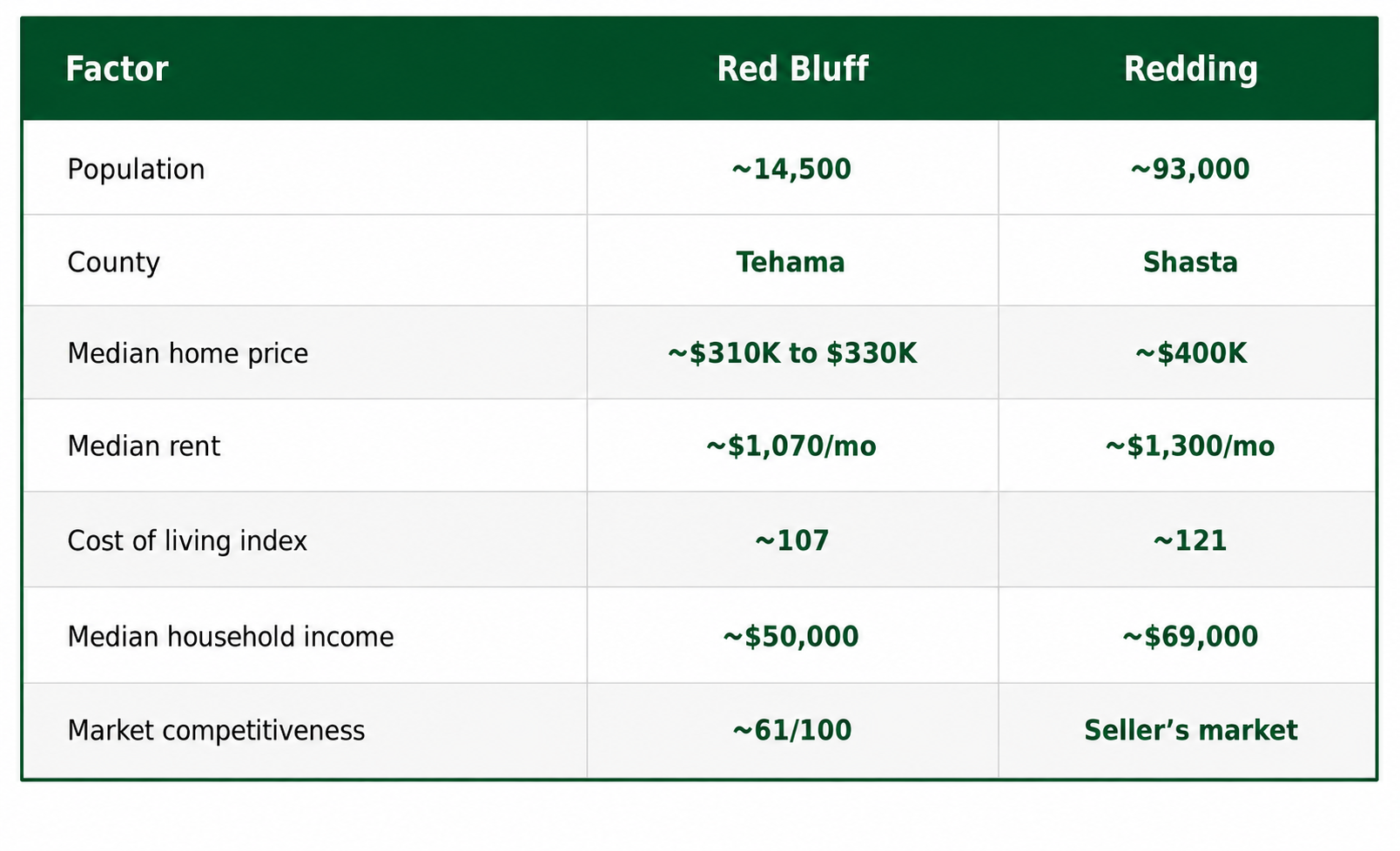
The pattern is clear. Red Bluff is smaller and more affordable across the board, while Redding brings higher prices alongside higher incomes and a broader economy.
What Sets Each City Apart
Red Bluff is a historic river town of roughly 14,500, known for its Victorian architecture, the annual Round-Up rodeo, and a genuinely tight-knit community.
Redding, at around 93,000 residents, is the largest city in far Northern California and functions as the regional center for healthcare, retail, education, and employment. Choosing between them is largely a choice between small-town affordability and big-town convenience.
Comparing Home Prices and Market Conditions
Price is where the two cities separate most sharply, and market conditions differ enough that your buying strategy should change depending on which one you target.
What Homes Cost in Each City
Red Bluff's median home price generally runs in the $310,000 to $330,000 range in 2026, while Redding sits closer to $400,000. That roughly $80,000 gap is significant, especially when translated into a monthly payment. The chart below puts both cities in regional and statewide context.
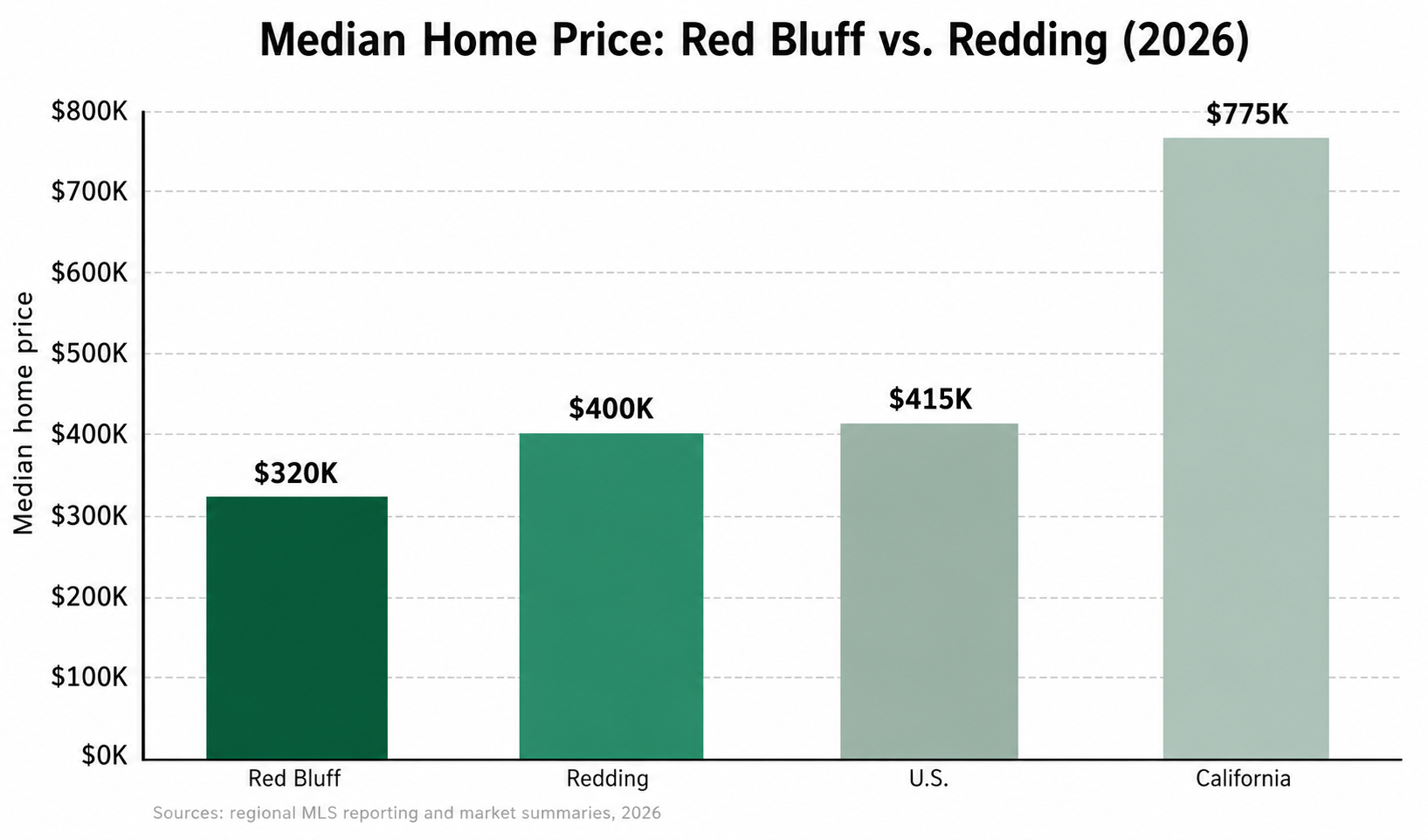
Both cities land far under California's statewide median, which is why buyers relocating from the Bay Area, Sacramento, or Southern California often find either option a relief. Red Bluff simply stretches the budget further.
How Competitive Each Market Is
Red Bluff runs a moderately competitive market, with a local competition score near 61 out of 100. Well-priced homes attract attention, but buyers generally have room to view properties, schedule inspections, and make thoughtful decisions without immediate bidding pressure.
Redding leans more toward a seller's market, with inventory hovering around three months of supply. Well-priced Redding homes move quickly, though overpriced listings still sit, and buyers retain some negotiating room.
What Your Budget Buys
In Red Bluff, a mid-$300,000s budget can reach a comfortable single-family home, and the historic Victorian District offers character properties with real walkability. Rural acreage is also more attainable.
In Redding, that same budget lands you an entry-level home, while the classic three or four bedroom sweet spot tends to start closer to $400,000. Redding's neighborhoods vary widely, from more affordable pockets to higher-end areas like Palo Cedro and Gold Hills.
The Cost of Living Difference
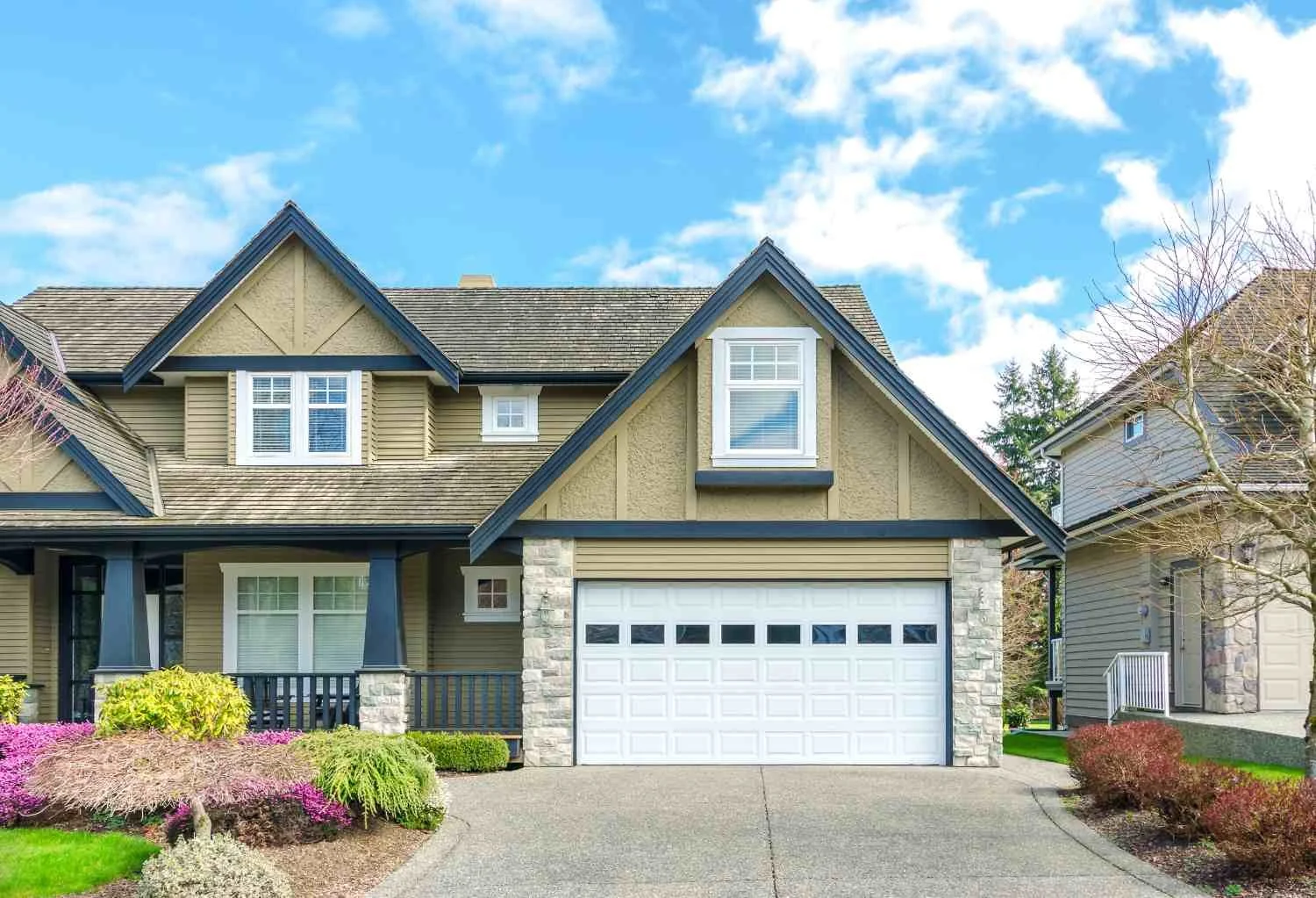
Purchase price is only part of the equation. Ongoing monthly costs differ meaningfully between the two cities and should factor into what you can comfortably afford.
Day-to-Day Expenses
Overall living costs in Redding run roughly 10 to 12 percent higher than in Red Bluff. Red Bluff's cost of living index sits near 107 against a national baseline of 100, while Redding lands closer to 121.
Rent follows the same pattern, with Red Bluff medians near $1,070 and Redding closer to $1,300. For budget-focused buyers, those gaps compound month after month.
Property Taxes and Insurance
Both cities benefit from Proposition 13, which caps property taxes at roughly one percent of assessed value at purchase and limits annual increases. Because Red Bluff's home values start lower, the resulting tax bills tend to be smaller.
Insurance deserves equal attention in both markets. Wildfire risk has tightened California's insurance landscape in recent years, so request homeowners quotes early and verify a specific property's hazard designation before committing.
Jobs, Schools, and Everyday Life
Beyond the numbers, the two cities offer different rhythms. Employment, education, and access to services often end up being the deciding factors for buyers weighing one against the other.
Employment and Commuting
Redding holds the stronger job market, with healthcare, government, education, and retail anchoring the local economy, plus a median household income near $69,000. Red Bluff's local job market is more limited, and many residents commute to Redding or Chico for work.
The drive between Red Bluff and Redding runs about 30 minutes on I-5, which is manageable but worth budgeting for in both time and fuel. Remote workers have increasingly gravitated toward Red Bluff precisely because that tradeoff disappears.
Schools and Higher Education
Red Bluff is served by the Red Bluff Union Elementary School District and the Red Bluff Joint Union High School District, with Red Bluff High School acting as a community hub.
Redding offers a wider range of public, private, and charter options, along with Shasta College and Simpson University. Families in either city should verify current performance data for specific schools rather than relying on district-wide averages.
Healthcare and Amenities
This is one of Redding's clearest advantages. Mercy Medical Center and Shasta Regional Medical Center provide the region's major healthcare resources, and Redding carries the bulk of the area's shopping, dining, and entertainment.
Red Bluff residents access those same services with a short drive north, which many find to be a reasonable trade for lower housing costs.
Outdoor Living
Both cities sit on the Sacramento River and deliver excellent outdoor access. Red Bluff offers boating, fishing, and kayaking, plus easy reach to Lassen Volcanic National Park and the Mendocino National Forest.
Redding counters with the Sundial Bridge, extensive river trails, Whiskeytown Lake, and Mount Shasta views. Neither city leaves outdoor enthusiasts wanting.
Which City Fits Your Situation?
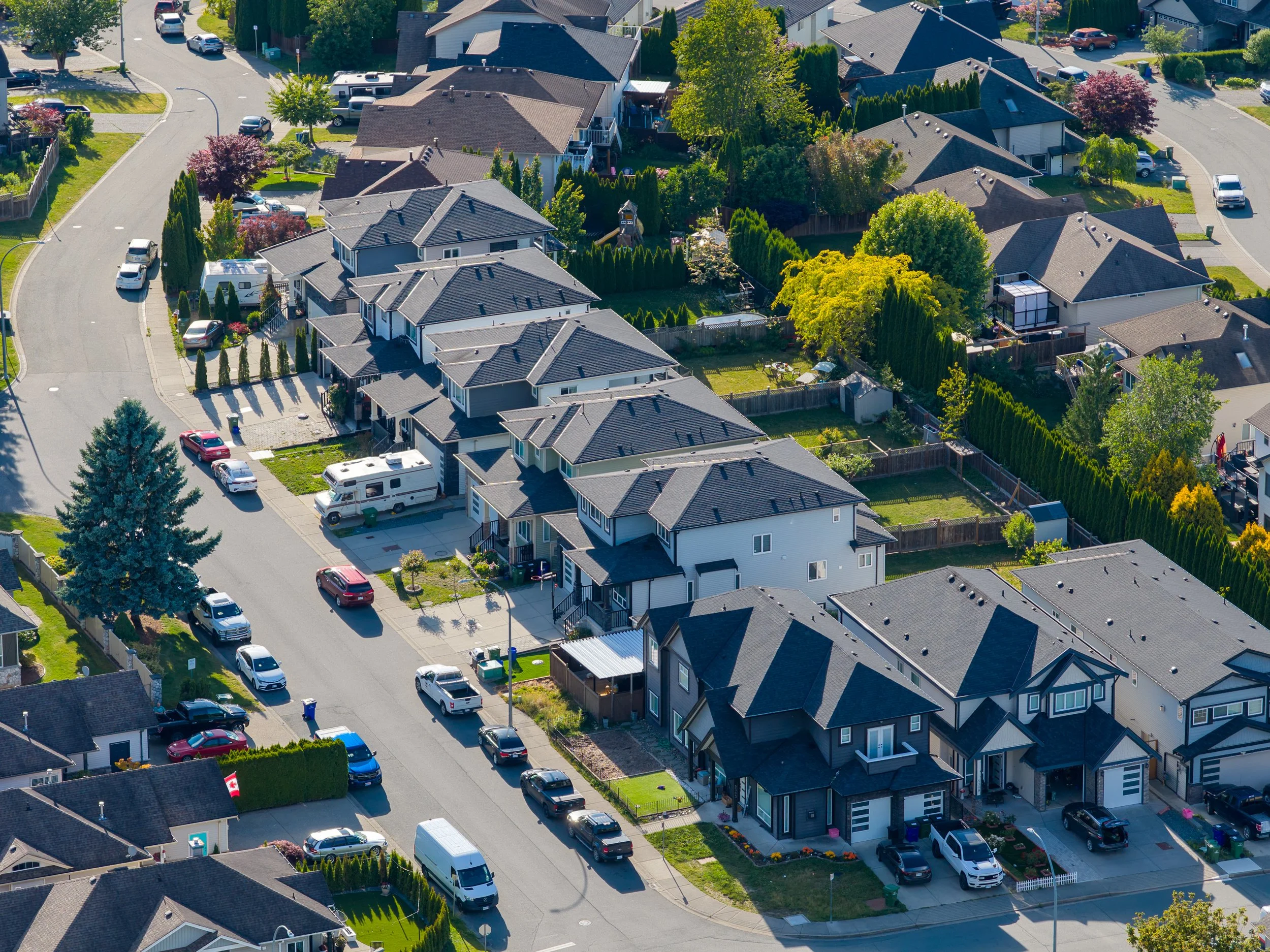
There is no universally better choice here, only the better fit for your circumstances. Matching the city to your priorities is what makes the decision straightforward.
Red Bluff Makes Sense If
You are working with a tighter budget, want the most home or land for your money, work remotely or do not mind a commute, and prefer a slower pace with a strong small-town community feel. Retirees and first-time buyers often find Red Bluff especially workable.
Redding Makes Sense If
You want proximity to jobs, hospitals, and services, need a wider selection of neighborhoods and schools, value shorter daily drives, or plan to work locally. The higher price comes with meaningfully more convenience and a stronger local economy.
Let's Find the Right Fit for You
Choosing between Red Bluff and Redding comes down to weighing affordability against convenience, and the honest answer depends on details no article can cover: your budget, your work situation, your family's needs, and what you want your weekends to look like.
Both markets reward buyers who come in prepared, with financing lined up and a clear sense of their priorities.
That is where local guidance makes the difference. Our team at Greater Life Realty works across both markets and can walk you through current listings in each city, compare real monthly costs side by side, and help you figure out which community actually fits your life. Reach out today and let's start narrowing it down together.
