
Mt Shasta Real Estate Guide: Mountain Living in Northern California
Sixty miles north of Redding, Interstate 5 climbs out of the Sacramento Valley and into a different world. Mount Shasta sits at about 3,600 feet on the flanks of a 14,000-foot volcano, a town of roughly 3,200 people surrounded by the Shasta Trinity National Forest.
It offers something the valley cities cannot: four real seasons, alpine air, snow in winter, and a mountain on the horizon that dominates every view. Buying here is genuinely different from buying in Redding or Anderson, from how prices behave to what utilities a property carries.
This guide covers what the market looks like and what mountain ownership actually involves.
Getting to Know Mount Shasta
Mount Shasta is small, scenic, and built around outdoor life. Understanding its scale and setting helps frame everything else about the market.
A Snapshot of the Market
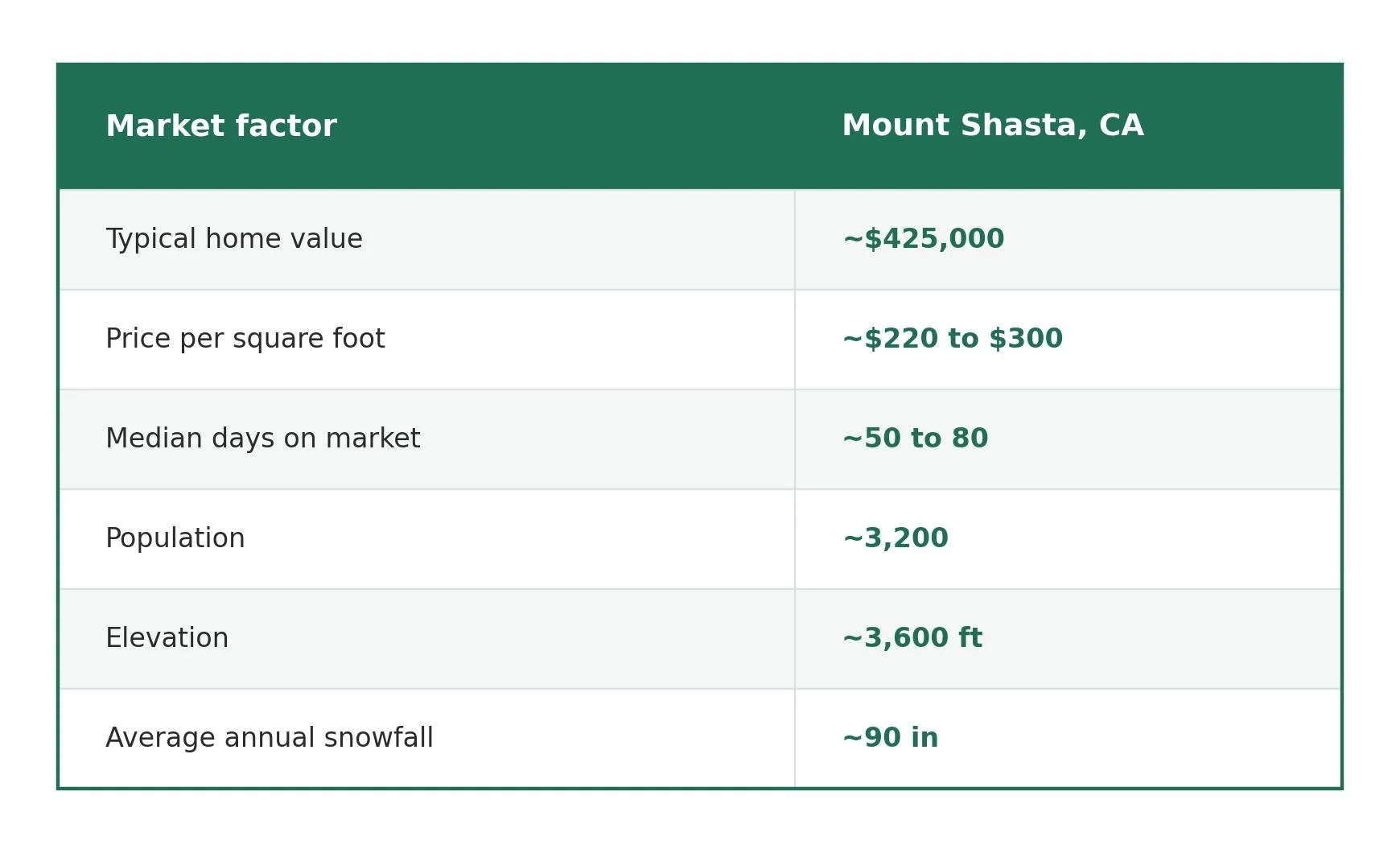
These figures describe a small, slower-moving market where scenery and setting carry real value.
Where It Sits in Northern California
The town sits directly on I-5, about 60 miles north of Redding and a similar distance south of the Oregon border. Redding handles major shopping, medical care, and air travel, while Medford, Oregon offers another option to the north.
Locally, the average commute runs under 10 minutes. Castle Crags State Park, Lake Siskiyou, and endless national forest trailheads are all within a short drive, which is much of the reason people choose to live here.
The Mount Shasta Housing Market
This is a small market, and that shapes how it behaves. Prices, inventory, and timelines all work differently than they do in a city with hundreds of monthly sales.
What Homes Cost
Typical home values sit around $425,000, with price per square foot generally running $220 to $300. The chart below shows where that lands regionally.
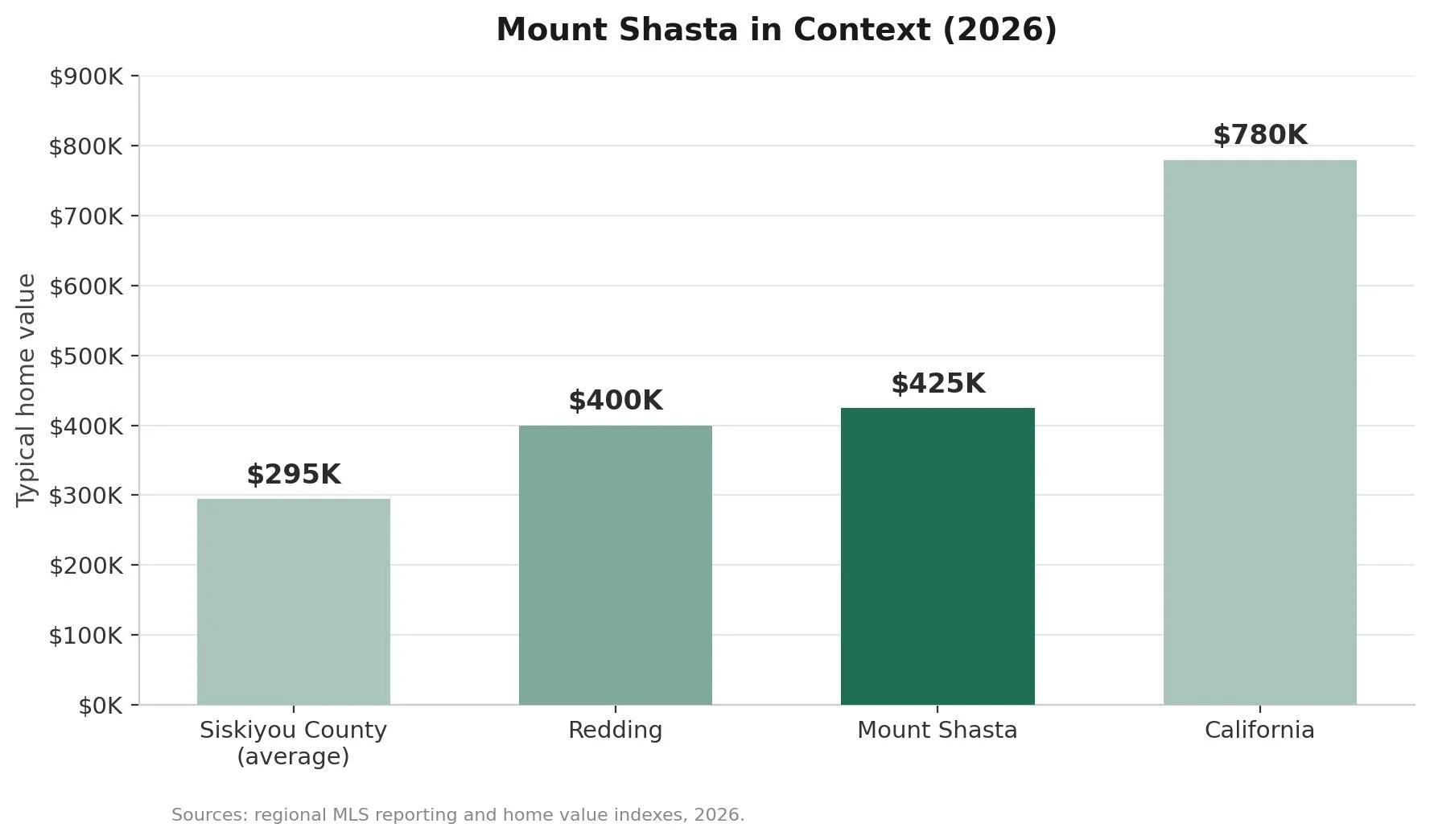
Mount Shasta carries a premium over the Siskiyou County average and edges above Redding, which surprises some buyers. You are paying for setting, views, and a desirable small town, not for square footage. The market still sits well below the California median.
Why Prices Vary So Much
Here is something worth understanding before you start comparing listings. Mount Shasta sees only a handful of sales in a typical month, sometimes fewer than fifteen. With that few transactions, a single luxury sale or a cluster of modest cabins can swing the reported median dramatically.
Different sources currently report medians anywhere from the low $300,000s to over $600,000, and none of them are wrong. They are measuring different things in a market too small for stable averages. Practical takeaway: compare individual properties and recent nearby sales rather than leaning on a headline median.
How Competitive the Market Is
Mount Shasta rates as somewhat competitive, scoring around 52 out of 100. Homes typically sell a few percent below list price and take roughly 50 to 80 days to go pending, though genuinely well-priced properties in sought-after spots move much faster. Buyers generally have room to schedule inspections and negotiate, which is a meaningful difference from the faster valley markets to the south.
What You'll Find on the Market
Housing here is more varied than a town of 3,200 might suggest, and one distinction matters more than any other when you start touring properties.
In Town Versus Rural Parcels
The 96067 ZIP code covers far more ground than the city limits, and the difference between an in-town home and a rural parcel affects utilities, maintenance, and cost of ownership.
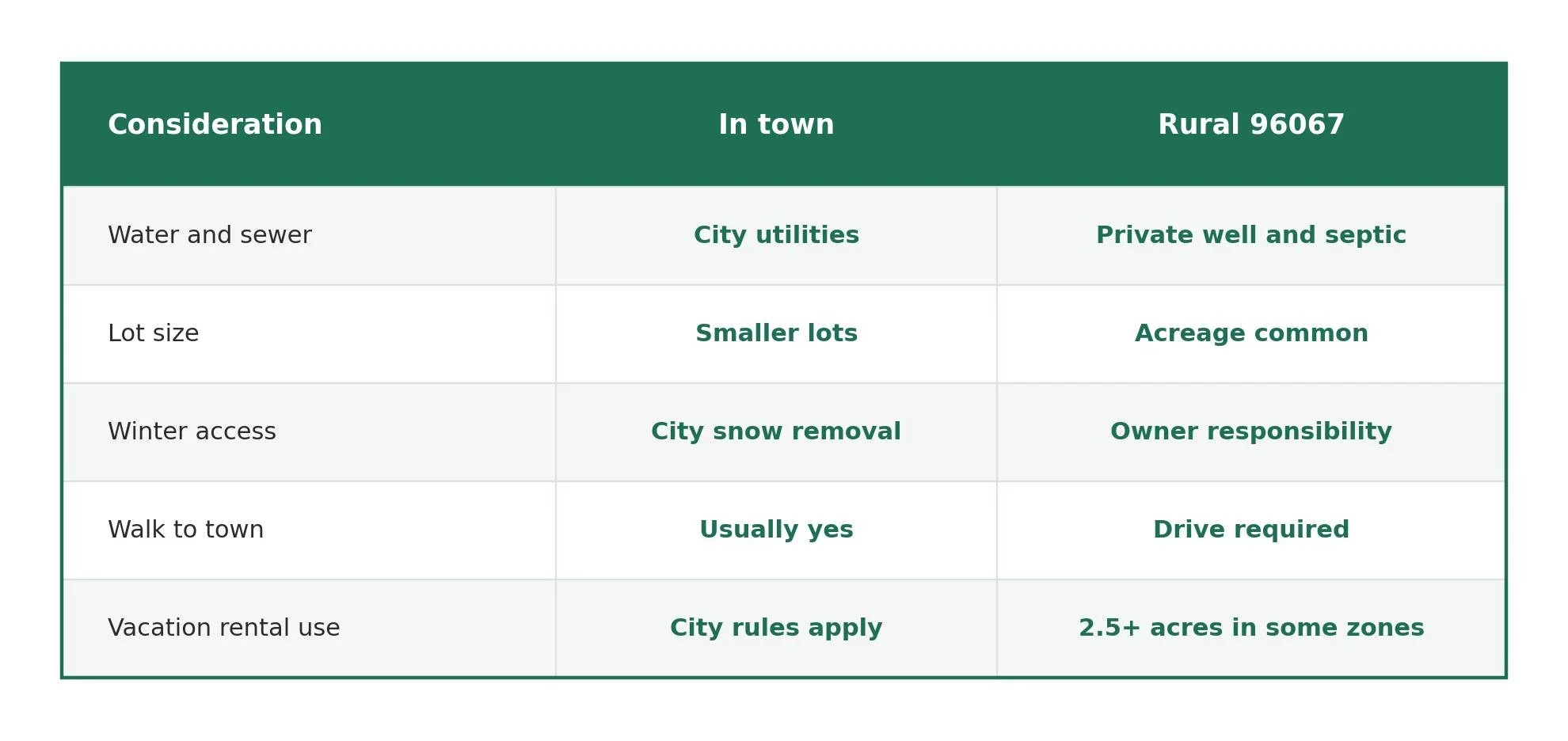
Neither option is better. In-town homes offer convenience, city water and sewer, and walkability to downtown. Rural parcels offer privacy, acreage, and quiet, with private well and septic systems and snow removal that falls to you. Verify utilities property by property rather than assuming.
Cabins, Acreage, and Second Homes
Inventory ranges from older craftsman bungalows and newer in-town builds to forested cabins, townhomes with mountain views, and larger parcels with ADUs or multiple structures. A significant share of buyers here are purchasing second homes or mountain getaways, and some pursue short-term rental income.
If that is your plan, understand the rules early. Outside city limits in unincorporated Siskiyou County, vacation rentals are permitted only in certain zoning districts, and in the Mount Shasta and Dunsmuir vacation rental area parcels generally must be at least 2.5 acres.
The county also requires a local property management firm available around the clock, a business license, and a transient occupancy tax certificate. Critically, permits are tied to the owner and may not survive a transfer of title, so never assume an existing rental permit comes with the house.
What Mountain Living Actually Involves
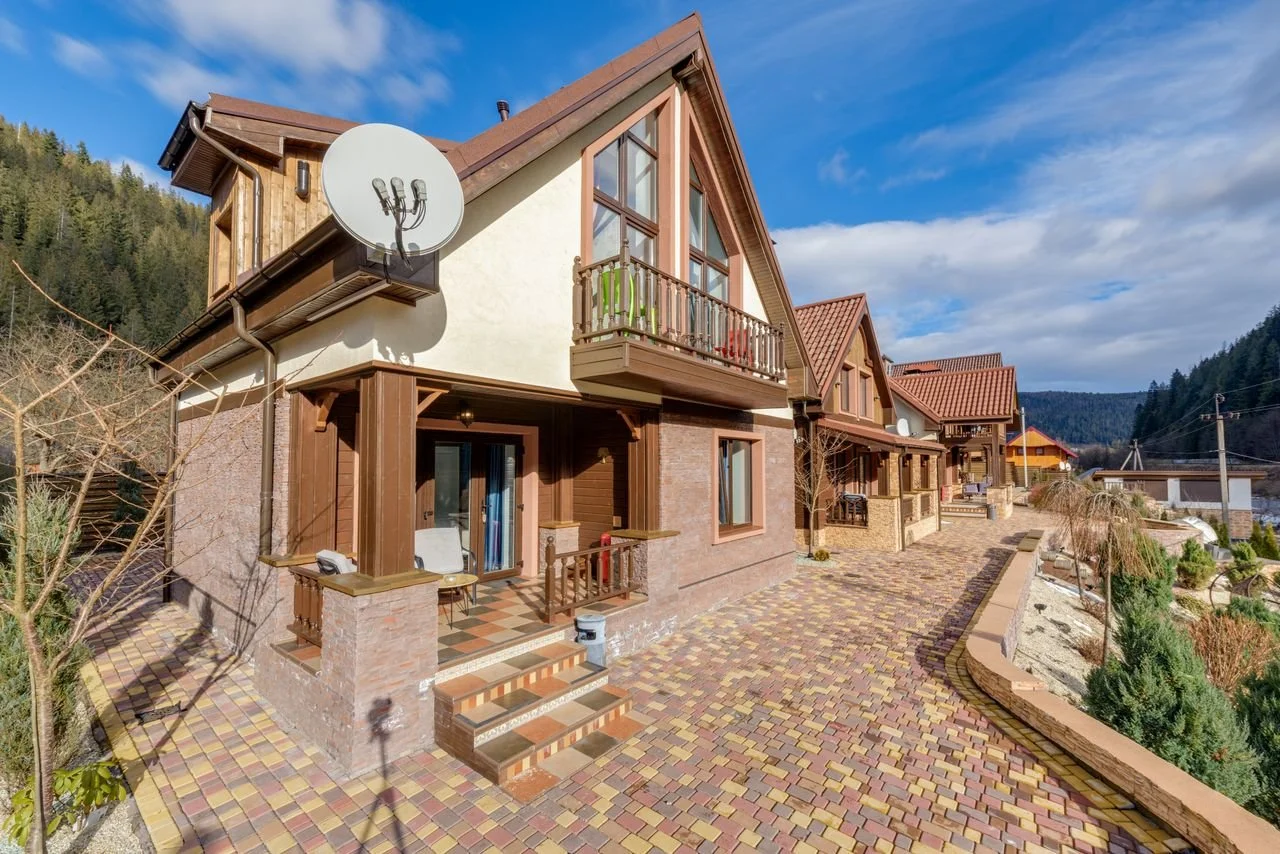
The lifestyle is the reason people move here, but mountain ownership carries practical realities that valley buyers do not face. Knowing them upfront prevents expensive surprises.
Four Real Seasons
Summers are warm, dry, and comfortable, with afternoons in the 80s, low humidity, and evenings cooling into the 40s. Winters bring average highs in the 40s and lows in the upper 20s. Annual precipitation runs around 37 inches. For many buyers coming from hotter parts of California, the seasonal variety is the main attraction.
Snow and Winter Access
The town averages roughly 90 inches of snow annually, falling mostly between November and May. That is a genuine winter, and it should shape your search. Ask about a property's winter access history, particularly for homes on slopes or shaded lots where snow lingers.
Budget for snow removal, and consider whether you need all-wheel drive or chains for your driveway during storms. The city handles snow removal on public streets, which makes in-town living more manageable.
Wildfire Risk and Insurance
This deserves direct attention. Much of the city sits within a very high fire hazard severity zone, and essentially all properties in the area carry some wildfire risk over a long horizon. That does not make the area unbuyable, but it does make insurance a front-end question rather than a closing detail.
Request quotes before removing contingencies, and ask about the parcel's fire hazard designation and defensible space status. Hardening features like a Class A roof, ember-resistant vents, enclosed eaves, and cleared vegetation can help with both safety and coverage.
Utilities and Connectivity
Beyond water and sewer, check the practical details at the property itself. Test cell service and broadband on site rather than relying on coverage maps, since mountain terrain creates dead spots.
Many rural homes use propane for heat, and woodstoves are common. These are normal features of mountain living, but they are worth pricing into your ownership budget.
Lifestyle and Community

The everyday experience here is what keeps residents loyal, though small-town living involves tradeoffs worth weighing honestly.
Outdoor Recreation
This is the payoff. Lake Siskiyou offers swimming and paddling, Mt. Shasta Ski Park handles winter sports, and the surrounding national forest delivers trails, waterfalls, and alpine lakes within minutes of town.
Climbing, fishing, mountain biking, and golf at Mount Shasta Resort round it out. Few places in California put this much recreation this close to home.
Small-Town Living and Its Tradeoffs
Downtown Mount Shasta is compact and friendly, with local shops and restaurants rather than big-box retail. Schools include Sisson School, Mt. Shasta High School, and Golden Eagle Charter School, with College of the Siskiyous nearby.
The tradeoffs are real: limited shopping, a small job market, and drives to Redding or Medford for specialized medical care and flights. Roughly a third of residents are 65 or older, and the town has senior facilities and services to match.
Ready to Explore Mount Shasta?
Mount Shasta suits buyers who want scenery, seasons, and outdoor access, and who are prepared for what mountain ownership involves. It works well for second-home buyers, remote workers, retirees, and anyone trading valley heat for alpine air. The market rewards patience and careful property-level research far more than it rewards speed.
Because this market is small and the property details matter so much, from well and septic systems to fire zones and rental eligibility, local guidance is worth a great deal here.
Our team at Greater Life Realty can help you evaluate specific properties, sort in-town options from rural parcels, and ask the right questions before you commit. Reach out today to start exploring what mountain living could look like for you.
