
Cost of Living in Redding, CA (2026): What Homebuyers Need to Know Before Moving
Redding offers something rare in California. A real shot at affordable homeownership without leaving the state. If you're weighing a move from the Bay Area, Sacramento, or Southern California, the cost of living in Redding, CA is usually the number that decides it.
Here's what your monthly budget will actually look like in 2026, including current data on home prices, taxes, utilities, and the day-to-day costs that add up.
The California Affordability Story Bay Area Buyers Are Chasing
Most buyers heading north on I-5 are chasing one thing. A California zip code they can actually afford. Redding delivers on that promise more clearly than almost any other mid-sized city in the state, but the full picture takes a little unpacking. The headline number is housing, and from there the rest of the budget falls into place.
How Redding Stacks Up Against the State
The first number most buyers want is the housing comparison.
The average California home runs around $733,000, while the average Redding home value sits at $390,282 according to Zillow's most recent index. That puts Redding roughly 47% below the state average, which is the single biggest reason relocation traffic up I-5 keeps growing.
Cost-of-living indices tell the same story from a different angle, with Redding running about 21% below the California average overall while landing 7% to 20% above the national average depending on the source.
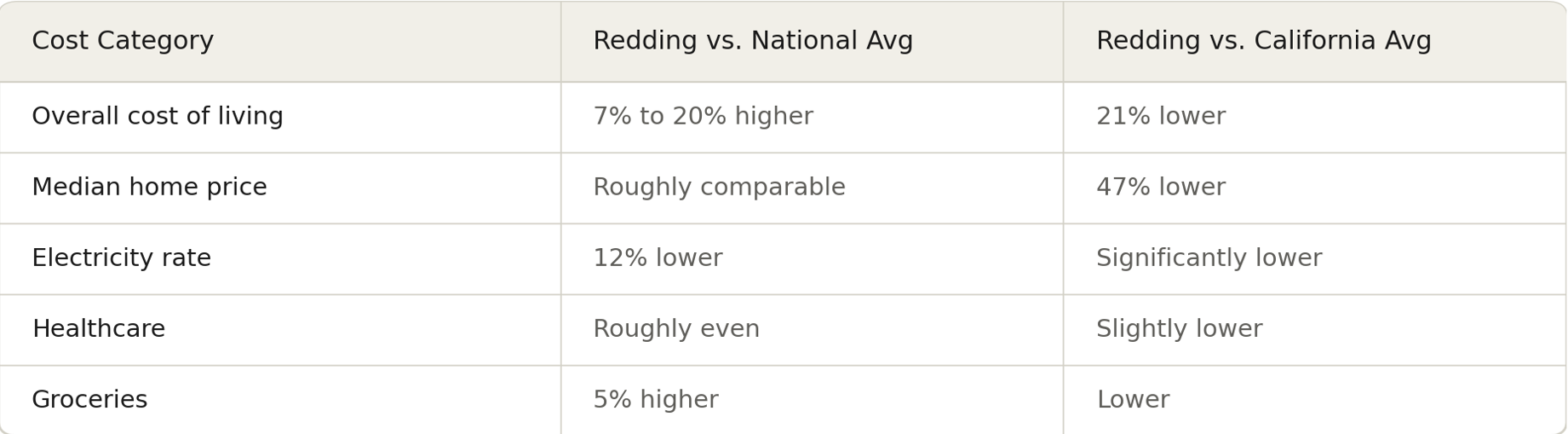
The gap with the rest of California is widest on housing and utilities, narrowest on groceries and fuel.
What Homes Actually Cost in 2026
Median sale prices vary by source and submarket, so it helps to look at a few angles.
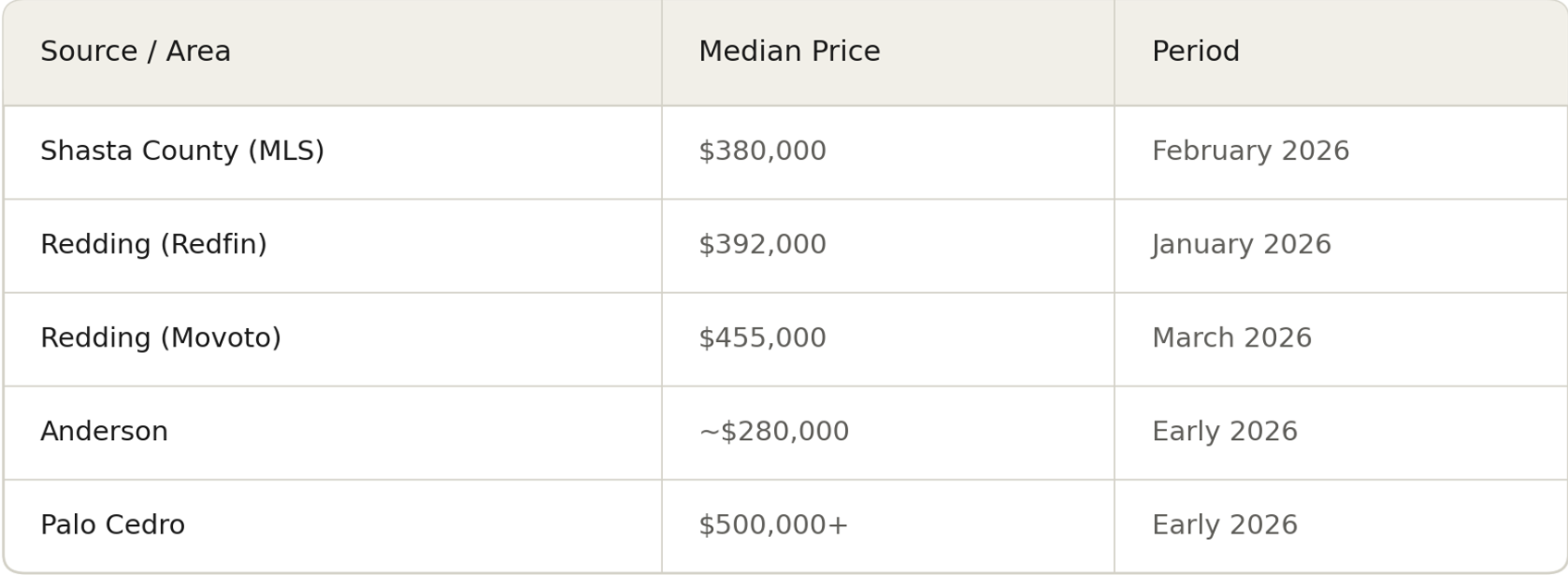
A few market signals from early 2026 are worth knowing before you start touring:
Months of supply: 3.19 — This measures how long it would take to sell every home currently listed at the current pace of sales. Anything under 4 months favors sellers, but 3.19 is far healthier than the 1-to-2-month frenzy of 2021-2022, when buyers were waiving inspections just to compete.
Sale-to-list ratio: 97% — Homes are closing at 97% of their asking price on average. That means modest negotiating room exists, but lowball offers usually don't land. Well-priced homes still move quickly.
Year-over-year price change: Down roughly 2.3% across Shasta County — Prices have softened slightly compared to early 2025, which is a small but real opening for buyers. It's not a crash, but it's the first time in several years that patience has paid off instead of cost you.
The bigger takeaway is that submarket choice matters more than the citywide median. The spread between Anderson and Palo Cedro alone can swing your budget by six figures, and that's before you factor in lot size, age of the home, or proximity to schools.
The Fixed Costs That Shape Your Monthly Payment
Two line items decide whether a Redding home fits your budget long-term: property taxes and utilities. Both behave differently here than in most of California, and both work in the buyer's favor more often than not.
Understanding how each one is calculated helps you forecast what you'll actually owe each month, not just at closing.
Property Taxes and the Prop 13 Advantage
California's Proposition 13 keeps property tax bills more predictable than in most other states.
The median effective property tax rate in Redding is 1.05%, with small variation by ZIP code:
96003: ~1.08%
96001: ~1.03%
City median: 1.05%
On a $400,000 home, that works out to roughly $4,200 per year, or about $350 per month folded into your mortgage escrow. The bigger long-term win is Prop 13 itself, which caps annual assessment increases at 2% as long as you own the home.
Buyers coming from states with reassessment-based property taxes often find this is the most underrated financial advantage of moving to California.
Why Redding's Utility Bills Look Nothing Like the Rest of California
This is where Redding genuinely separates itself from the rest of the state.
Redding Electric Utility (REU) is a city-owned, not-for-profit utility, which means residents are not on PG&E. The savings are substantial:
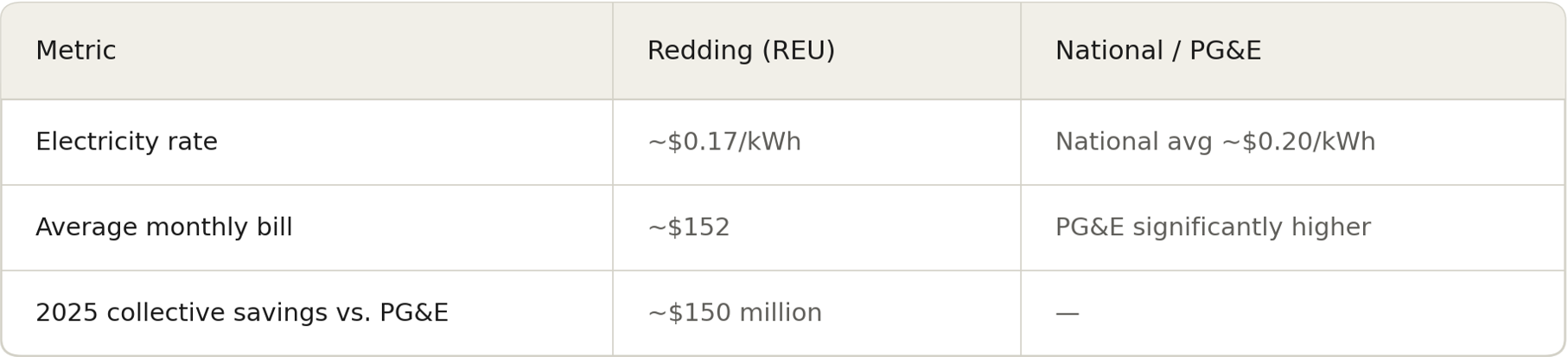
The catch is that rates are rising. REU has proposed 4.5% annual increases for four consecutive years starting April 1, 2026, which would add about $7 per month in years one and two and another $8 per month in years three and four.
Even after those increases, REU expects to remain among the most affordable electric utilities in California.
Everyday Spending and the Bigger Budget Picture
Outside of housing, the day-to-day numbers in Redding sit closer to the national average than anywhere else in California. That matters because it's where your discretionary income actually shows up: groceries, gas, the doctor's office, the random Saturday spend.
The point of looking at these numbers together is to see whether a lower mortgage actually translates to more breathing room each month, and in Redding it usually does.
Groceries, Gas, and Healthcare
Routine spending runs slightly above the national average, well below California's coastal cities.
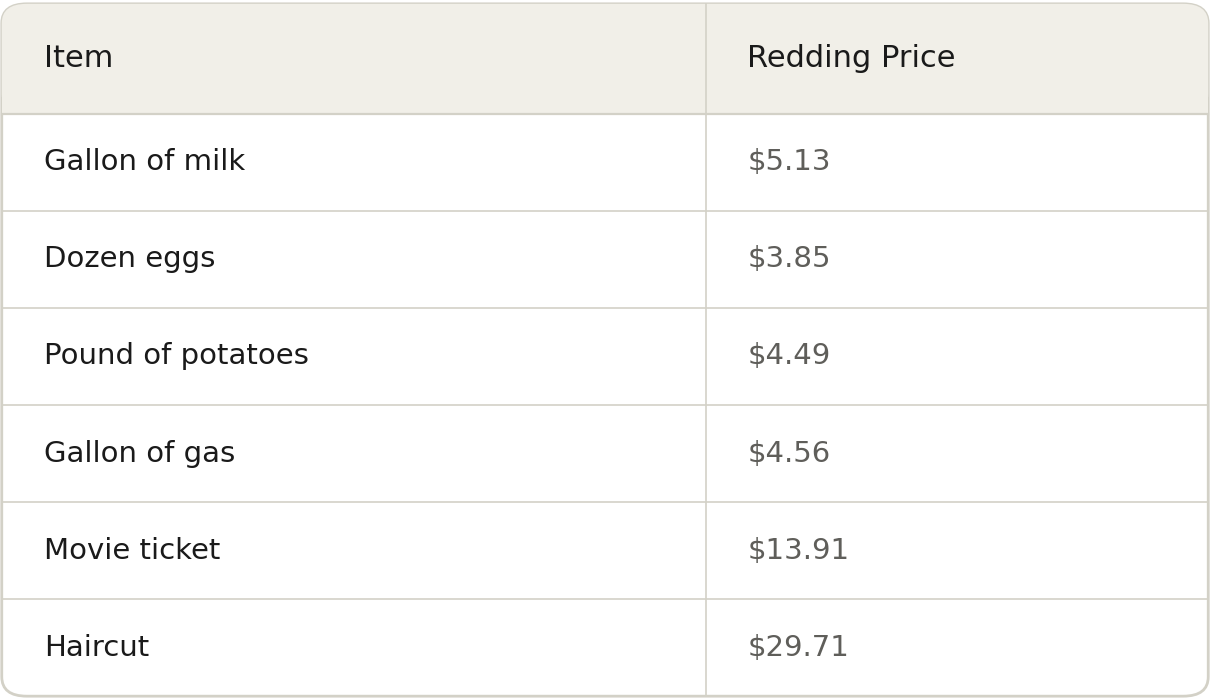
Groceries come in about 5% above the national average overall. Healthcare costs land roughly even with the national average, which is unusual for California and one of the quieter advantages of the area.
What a Real Monthly Budget Looks Like Here
Pulling the numbers together gives a clearer picture of what buying a home in Redding, CA actually costs each month. For a buyer purchasing a $390,000 home with 10% down, here's a realistic monthly breakdown:
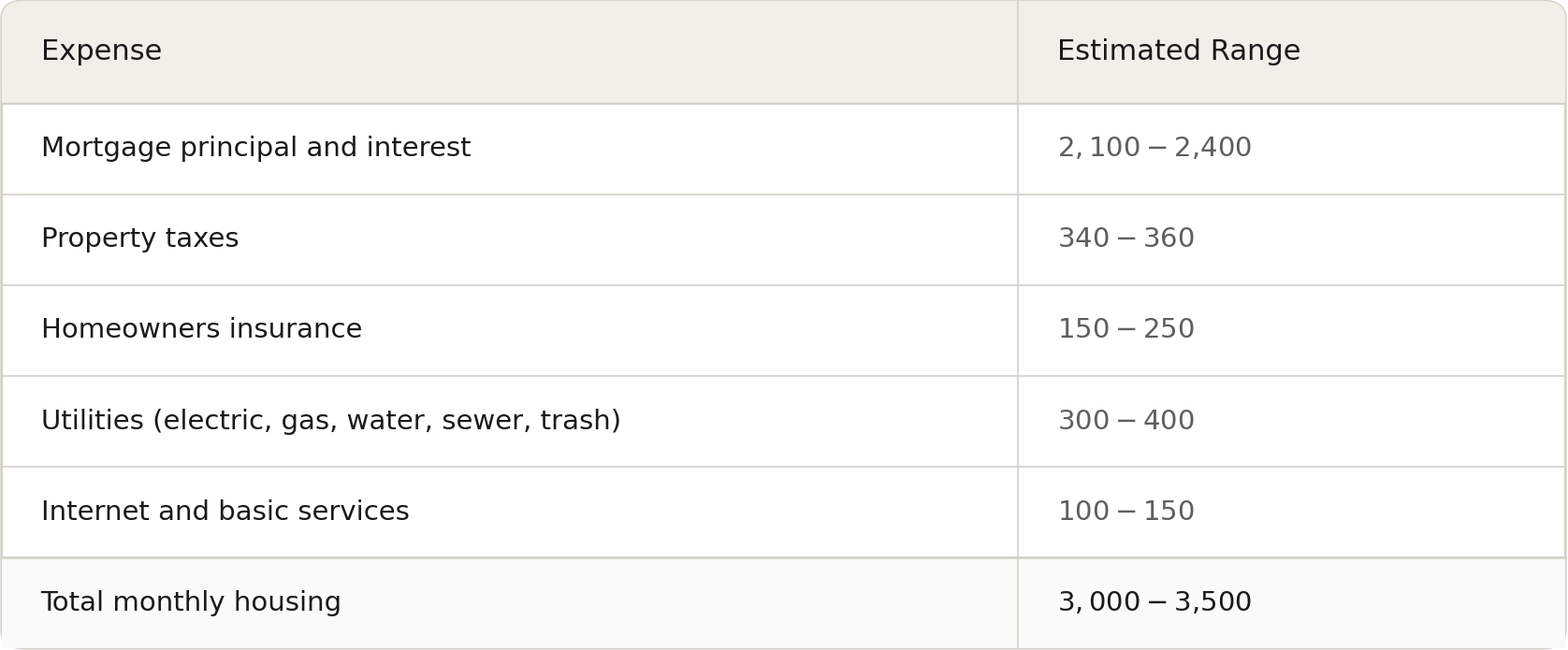
That total is reachable on Redding's median household income of $69,443. Salary.com's 2026 figures put overall cost of living at about $2,732 per month for a single person and $6,017 for a family of four, up roughly 3% from 2025.
What You Trade for the Lower Price Tag
Affordability comes with a few realities worth knowing before you sign.
The trade-offs:
Wildfire risk: Roughly 99% of Redding properties carry some risk over the next 30 years, and insurance premiums reflect that
Summer heat: Days above 105°F are expected to increase over the coming decades
Smaller job market: Fewer industries and slower hiring than urban California
Healthcare access: Specialist wait times can be longer than in larger metros
The wins that balance it out:
13.46-minute average commute (well below the national average)
Outdoor access: Lakes, rivers, and trails are part of daily life, not weekend trips
Lower density: Less traffic, more space, easier parking
Predictable utility costs: REU's not-for-profit model insulates residents from PG&E volatility
Is Redding the Right Move for You?
Redding sits in a sweet spot heading into 2026. Prices have softened slightly year-over-year, the market is balanced enough to give buyers room to negotiate, and Prop 13 locks in long-term tax predictability the moment you close.
For buyers willing to trade coastal weather and big-city job density for a sub-$400,000 home, lower utility bills, and a 13-minute commute, the math works in a way it rarely does anywhere else in California.
Ready to Run the Numbers on a Real Redding Home?
Cost-of-living averages only get you so far. The real question is what your monthly payment looks like on a specific home in a specific neighborhood, with your down payment, your loan terms, and your insurance quote.
Schedule a free home buying consultation with the Greater Life Realty team to get a clear, no-pressure walkthrough of:
Which Redding submarkets fit your budget and lifestyle
Real monthly cost scenarios on homes you're actually considering
Wildfire-zone and insurance considerations before you make an offer
Contact us today to set up your free consultation and start mapping out a Redding move that fits your numbers.
